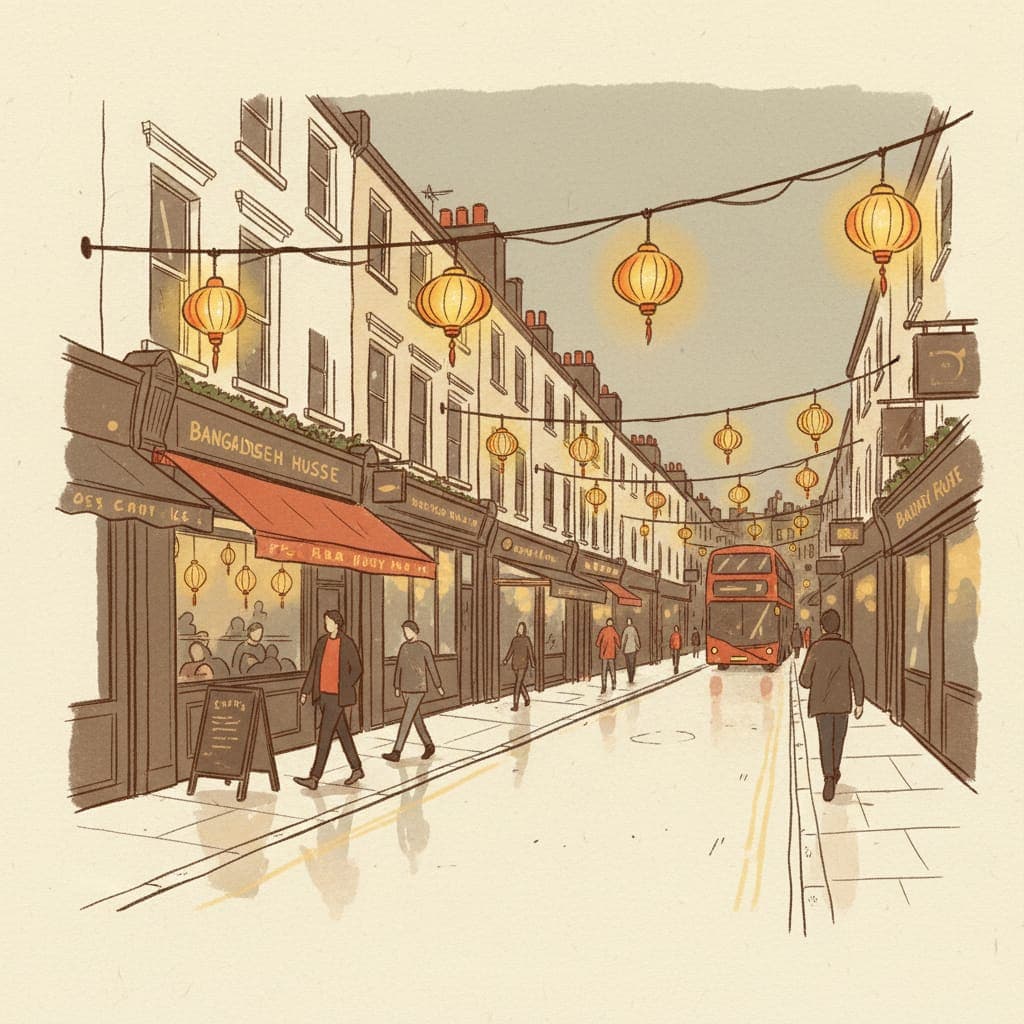
Why London is different
London has more restaurants per capita than any UK city — and a particularly informed customer base. The competition for "best curry near me" in inner London is materially different from the same search in a market town. You're not competing on food alone; you're competing on visibility, on review velocity, on photography, and on speed of response to enquiries.
Three numbers worth knowing if you're operating a kitchen in Zones 1–4:
- Google Ads CPCs for food terms in central London typically sit at £3–£5+, the most expensive food market in the UK. The same term in Croydon, Walthamstow or Streatham is closer to £1.50–£2.50.
- Local pack three-spot competition for inner-London "indian / pizza / chicken near me" searches typically has 15–40 well-maintained competitor profiles within 1–2 miles, versus 4–8 in many regional cities.
- Average review counts for established London takeaway leaders sit between 300 and 1,500+ Google reviews. New entrants typically need to be at 80+ before they appear competitive in the local pack.
That's actually good news. It means small operational improvements compound quickly here, because so few independents do them consistently. A restaurant that builds a steady review-collection routine will tend to outrank one with better food but no review programme — see how to get more Google reviews for a restaurant. A kitchen that posts two well-shot reels a week will pull attention from competitors that post once a fortnight — our Instagram for restaurants UK guide covers what actually works.
How London customers find restaurants
The discovery patterns we see in London are different from regional cities in a few specific ways:
Search is more cuisine-specific. "Curry near me" is competitive enough that it's increasingly worth targeting "balti", "biryani", "karahi", "Bengali curry", "Sri Lankan curry" specifically. Customers know what they want and search for it by name.
TripAdvisor still matters more here. Tourist density in Zone 1 means TripAdvisor-mediated discovery is non-trivial in a way it isn't in Bradford or Glasgow. For dine-in restaurants in Soho, Covent Garden, Brick Lane and around the South Bank, an actively maintained TripAdvisor listing earns its keep.
Delivery platform behaviour splits sharply by area. Inner London (Zones 1–2) has high cyclist-courier density and shorter delivery windows — Deliveroo and Uber Eats are dominant. Outer London (Zones 3–4) skews more towards Just Eat, longer delivery distances, and a more price-sensitive customer base. Your platform mix should match your zone — see our breakdown on should I leave Just Eat and go direct.
Brand-name search compounds. London customers will often search a restaurant by name after seeing it on Instagram, Time Out, or word-of-mouth. Owning the first page of Google for your own brand name (your site, your GBP, your social, plus a couple of press mentions) protects against being intercepted by an aggregator listing.
What we typically do for a London client in the first 90 days
Days 1–14 — diagnosis. We audit your Google Business Profile, your top five local competitors, your website's Core Web Vitals, your delivery-platform listings, and your Instagram metrics. You get a written report and a prioritised plan. If you're outside Zones 1–2 we also audit your delivery-radius geography against where your competitors actually deliver.
Days 14–45 — foundations. We rebuild your Google Business Profile, fix citation inconsistencies across UK directories, set up automated review requests, refresh your menu photography, and tighten the website's local SEO signals. If you're running ads, we restructure them around campaign types Google has updated since your last agency touched them — Performance Max behaves very differently from old Smart Campaigns and most legacy accounts haven't been migrated properly.
Days 45–90 — momentum. Weekly posts, weekly performance reviews, monthly photo refresh, monthly competitor scan, monthly report. By day 90 you should have a clearer view of what's actually moving the needle in your specific postcode — and a steadier flow of new diners from channels you can measure.
Realistic ad budgets in London
- Inner London (Zones 1–2) dine-in restaurants: £40–£80/day Google Ads is the realistic floor for any meaningful share of voice on cuisine + neighbourhood search.
- Outer London (Zones 3–4) takeaway: £20–£35/day works for most postcodes. CPCs are closer to Manchester / Birmingham levels.
- Match days, big events at the O2, Wembley, Tottenham, Stamford Bridge, Emirates all distort delivery-platform demand inside a 2–3 mile radius. We weight or pause campaigns accordingly.
For a fuller breakdown of when paid actually pays back, see is Google Ads worth it for takeaways and our comparison on Google Ads vs Just Eat.
Postcodes we work in
- E1 / E2 / E8 (Whitechapel, Bethnal Green, Hackney) — Brick Lane corridor, dense Bangladeshi independent scene
- N1 / N4 / N7 / N16 (Islington, Finsbury Park, Stoke Newington) — mixed cuisines, strong Turkish presence
- NW6 / NW10 (Kilburn, Willesden) — strong delivery + dine-in mix, growing independent scene
- SW9 / SW2 / SE15 (Brixton, Peckham) — Caribbean, West African, growing brunch / dine-in
- SW17 / SW16 (Tooting, Streatham) — strong South Asian + halal corridor
- CR0 / IG / RM (Croydon, Ilford, Romford outer) — outer-London takeaway-heavy markets, very different economics from Zone 1
- UB / HA (Southall, Wembley) — South Asian heartland, photo-led GBP marketing matters most here
What we typically work on for London kitchens
For a Zone 1–2 dine-in restaurant, the usual sequence is: a fast, well-built restaurant website with strong on-page SEO, an active Google Business Profile maintained weekly, and an Instagram-led social media programme that respects the inner-London customer's attention span. For a Zone 3–4 takeaway the centre of gravity shifts towards Local SEO for cuisine-specific search ("biryani Croydon", "balti Romford"), platform-listing optimisation, and modest Google Ads on the keywords where CPCs are still affordable. Most London clients also need ongoing menu and photography work — outdated photography is one of the most common things we tighten up in audits.
What we don't promise
We don't promise specific revenue uplifts, top-3 rankings, or anything else we can't underwrite. London is too varied and too competitive for any agency to guarantee outcomes honestly. The shop in Soho and the takeaway in Romford are running essentially different businesses.
What we do commit to: a written 90-day plan, a monthly report, transparent pricing, and a clear escape hatch if it isn't working at month four. If after looking at your account we think you'd benefit more from fixing one or two specific things yourself than from hiring an agency, we'll say so.