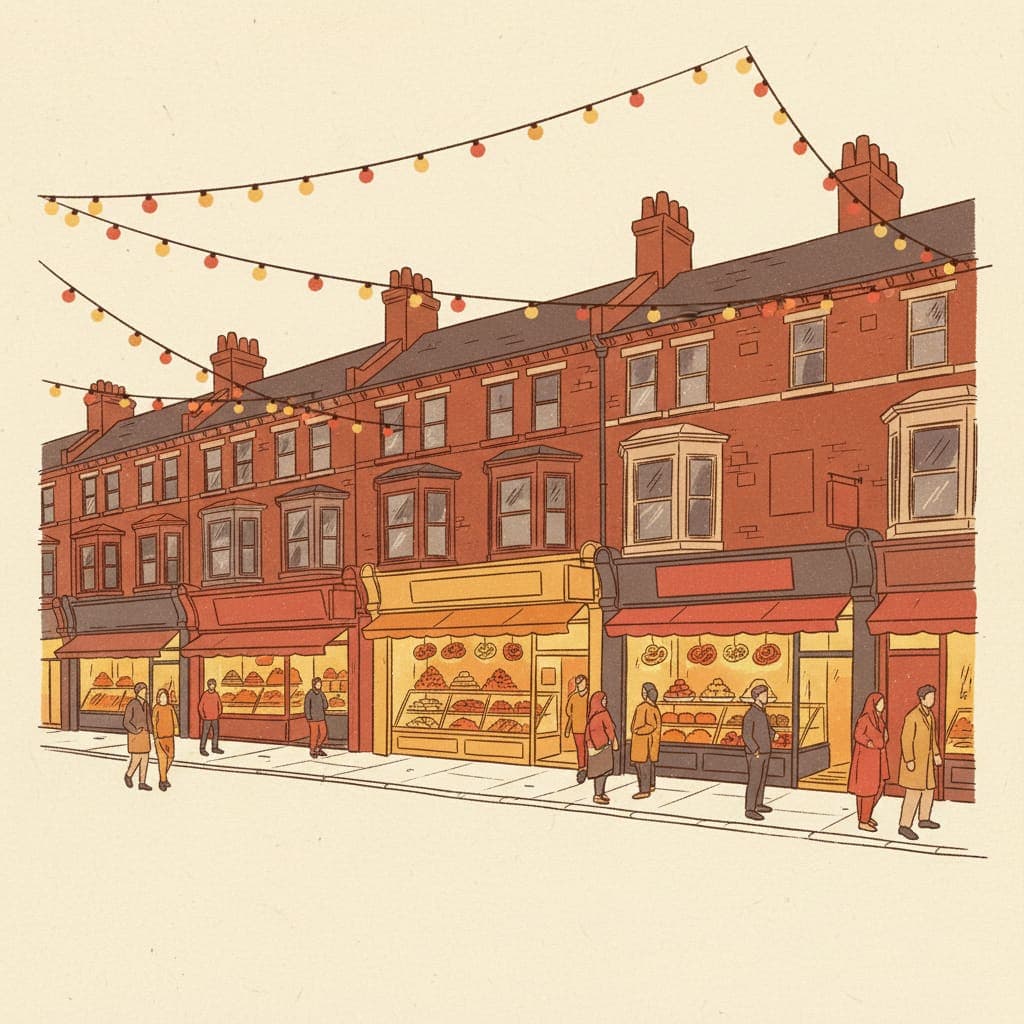
What's distinctive about Leicester
Leicester punches above its weight in food diversity. Within a few miles of the city centre you have Belgrave Road's Gujarati and Jain restaurants, Highfields' Somali and Yemeni cafés, North Evington's South Asian takeaways, a substantial East African population in Spinney Hills, and a city-centre fine-dining scene that's grown steadily. That diversity is great for diners and challenging for marketing — every cuisine needs slightly different visual cues, language framing, and platform priorities.
The other distinctive thing about Leicester is how little of its food scene is properly marketed online. Many of the most-loved restaurants in the city have neglected Google Business Profiles, no website, no Instagram presence. That's bad for them and a real opportunity for kitchens that do invest.
What's different about Leicester economics
A few specifics that shape how marketing works here:
- Vegetarian Gujarati restaurants on Belgrave Road run a different SEO playbook entirely. Customers searching "thali Leicester", "vegetarian Indian Leicester" or "Gujarati restaurant Belgrave Road" are looking for very specific cues — Jain-friendly menus, traditional preparation, festival-special items. Generic "best Indian Leicester" content rarely converts that audience. Photo and menu work matters disproportionately — see our takeaway menu design guide for the principles.
- Google Ads CPCs in LE-postcodes typically sit at £0.80–£1.60 for food terms — among the cheapest in the UK. £10–£15/day spend produces real volume, especially for under-served niches like halal-only or strict vegetarian.
- Festival cycles drive demand. Diwali, Eid and Navratri are not minor calendar items here — they reshape the city's food economy for weeks. We track them as separately as Christmas in our planning. A Leicester restaurant that promotes its Diwali sweet menu in late September wins a market share most agencies don't even notice exists.
- Multilingual marketing earns more here than the UK average. Hindi, Gujarati, Urdu and Somali speakers are large enough customer segments that bilingual content (Instagram captions, WhatsApp comms, menu options) measurably moves engagement, especially for first-generation diaspora customers.
How Leicester customers find restaurants
Discovery patterns we see across LE-postcode kitchens:
Belgrave Road regulars rely heavily on word-of-mouth and longstanding family loyalty. That makes the local-pack search ("Indian sweets Belgrave Road", "thali near me") disproportionately valuable for capturing new customers who don't have a default place yet — students, visitors, and the next generation of younger diners.
Google Maps three-pack is genuinely contestable. Many established Leicester restaurants have under-maintained Google Business Profiles. A kitchen running a steady weekly GBP routine typically moves up the local pack faster here than in Birmingham or London. Our walkthrough on how to rank a restaurant on Google Maps covers the foundations.
Reviews compound visibly. A steady review-collection programme typically moves a Leicester takeaway from 25 to 120 reviews in 12 months. The competitive bar is lower than in Birmingham or Manchester, so the visible gain is bigger.
Instagram pulls strongly for the city-centre dine-in scene (LE1) and student-area cafés around De Montfort and Leicester University. Less so for the suburban takeaway market, where Google Maps and delivery apps do most of the discovery work. Our Instagram for restaurants guide is the starting point if you're in the city centre.
Realistic ad budgets in Leicester
- Most LE-postcode takeaways work at £8–£15/day Google Ads spend. That's low by national standards and reflects how cheap food-term clicks remain here.
- City-centre dine-in (LE1) typically needs £15–£25/day because brand-led search has more competition from chains.
- For most LE-postcode kitchens, organic SEO and GBP investment outperforms paid for the same effort. We'll usually recommend fixing your GBP, photography and reviews before recommending a meaningful ad budget.
For a wider view of when paid actually makes sense, see is Google Ads worth it for takeaways.
Postcodes we work in
- LE4 (Belgrave / Rushey Mead) — the Golden Mile, Gujarati restaurants, sweet shops, festival-driven calendar
- LE5 (Highfields / North Evington / Spinney Hills) — Somali, Yemeni, mixed South Asian, very under-marketed
- LE2 / LE3 (Aylestone / West End / Braunstone) — mixed suburban takeaways, broad-cuisine market
- LE1 (City centre) — student and dine-in focus, brand-led search matters
- LE7 / LE8 (Oadby / Wigston / Blaby) — quieter suburbs, less competition, very accessible local-pack wins
- LE16 / LE17 (Market Harborough / Lutterworth edge) — outer market-town takeaway zones, low competition
What we typically work on for Leicester kitchens
For Belgrave Road Gujarati and Jain restaurants the highest-leverage work is usually a Google Business Profile that makes vegetarian and Jain-friendly status unambiguously findable, plus menu and photography work that signals tradition and authenticity rather than generic curry-house imagery. For Highfields and Spinney Hills kitchens, Local SEO and an active social media presence in mixed-language captions tend to do more than paid. For most LE-postcode takeaways, modest Google Ads at £8–£15/day adds incremental orders cheaply once foundations are in place — Leicester CPCs are among the lowest in the UK.
What we don't promise
We don't promise specific revenue lifts or ranking positions. Leicester is diverse enough — Belgrave Road, Highfields, the city centre and Oadby are essentially four different markets — that any agency claiming a guaranteed outcome should be questioned.
What we do commit to: a written 90-day plan, monthly reporting, transparent pricing, and a clear pause or pivot if it isn't working by month four. If we look at your kitchen and think you'd benefit more from fixing one or two specific things yourself — sorting your GBP photos, replying to your reviews properly, posting once a week on Instagram — than from hiring an agency, we'll say so.