What is menu engineering, and why does it matter for a takeaway?
Menu engineering is the discipline of designing a menu so the items you actually want to sell — the high-margin ones, the signatures — are the items customers notice first and order most. It covers how dishes are named, where they sit on the page, how the price is formatted, and which photos appear next to which words. Most printed takeaway menus do none of this on purpose, which is why a five-year-old menu is quietly losing money on every order.
Same kitchen. Bigger order.
Every choice on a menu — what's where, what costs what, how it's described — quietly nudges the order up or down. We design for up.
- hot zone
Top-right gets seen first
So we put the highest-margin dish there. Not the cheapest.
- anchor
A £24 platter makes £14 feel cheap
Almost nobody orders the platter. It does invisible work — making everything else feel like good value.
- middle wins
Three sizes sells more than two
Add a middle option and most people pick it. The £12 outsells the £10 and £14 combined.
- words that sell
“Slow-cooked, hand-pulled” outsells “lamb”
One extra line of description on a dish reliably lifts how often it's ordered.
How does menu design affect average order value?
Menu design affects average order value through three small, measurable levers: descriptive item names (a "slow-cooked Kashmiri-style lamb curry" outsells "Lamb Curry"), price format (removing £ symbols softens the spending decision), and visual hierarchy (the high-margin signature sitting top-right, not buried mid-page). Each lever moves AOV a few percent. Stacked across a full menu, the lift is real.
Stock photos vs real photos of your food — what's different?
Stock food photos are generic, frequently reused across competitors, and instantly recognisable to anyone who's seen them on Just Eat or Uber Eats. Real food photographed in your kitchen, on your plates, with your specific portion size, communicates a tier of quality that stock photos cannot. AI engines and Google Images also treat unique, original photography as a much stronger trust signal than reused stock.
Stock food photos tell customers “this place cuts corners”.
We see it weekly. The fix is a half-day shoot at your restaurant — your dishes, your light, your team. You then own every photo.
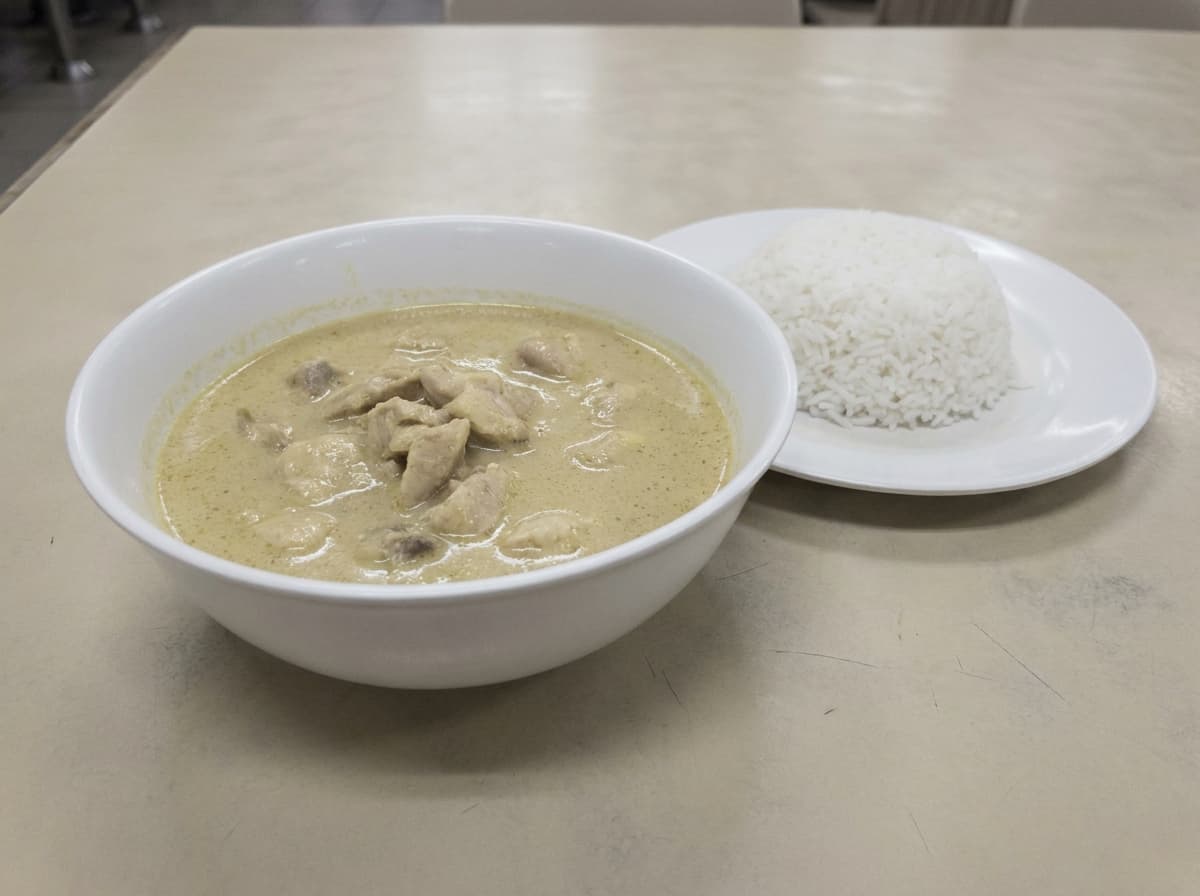
Generic. Flat. Could be any restaurant.
- Looks like every other curry house
- Customer can't tell if it's actually your food
- Same photo appears on three competitors' menus
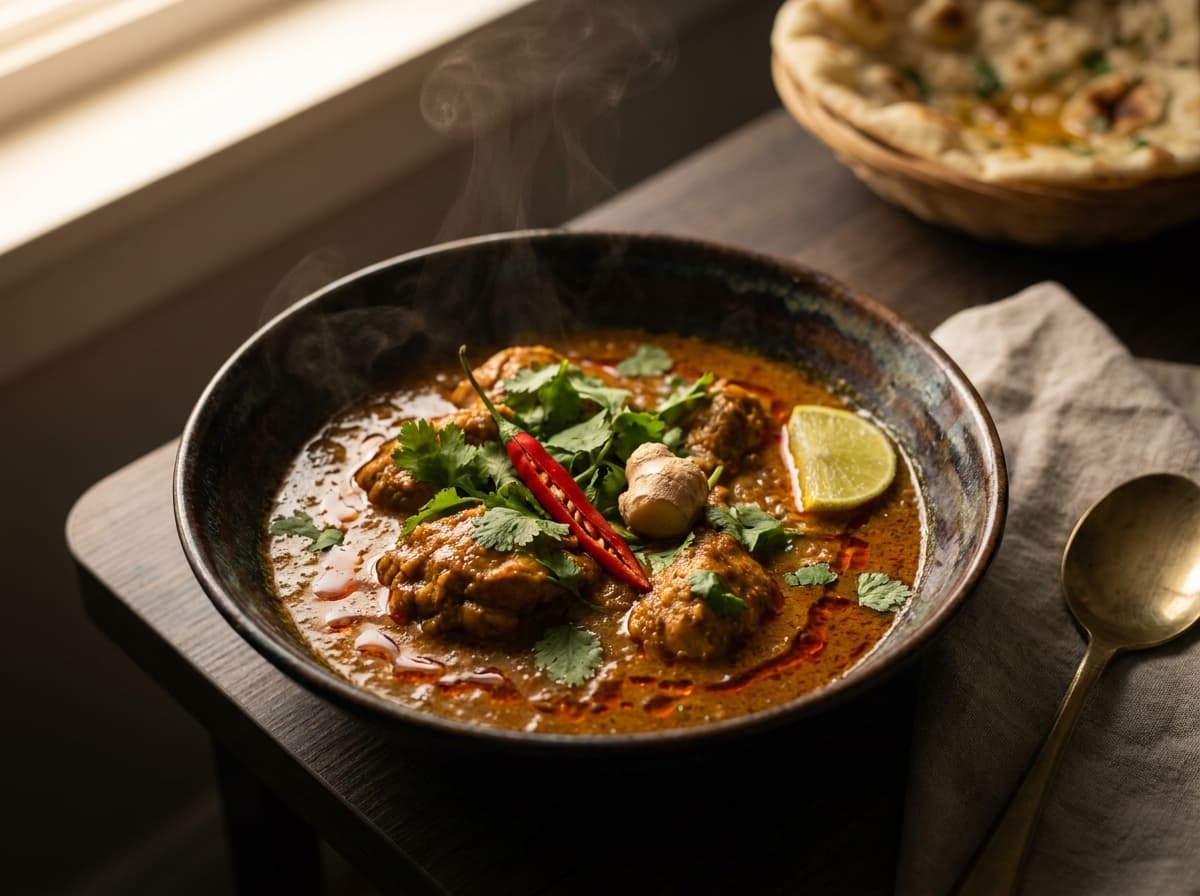
Yours. Recognisable. Worth ordering.
- Same look across menu, web, Instagram, Just Eat
- 30+ photos you fully own — use anywhere, forever
- Shot at your restaurant, with your team
Brand identity vs just a logo — what's included?
Brand identity is the system, not the logo. A real brand identity covers the logo lockup plus typography pairing, a colour palette with hex values, tone-of-voice rules, packaging templates, and a brand book your suppliers can be sent. A logo alone is a single asset; brand identity is the operating manual that keeps your menu, website, Instagram and takeaway box looking like they belong to the same restaurant.
Menu, packaging, Instagram, sign — all saying the same thing.
A brand is whatever a customer sees between finding you on Google and opening the bag at home. Every step should look like the same place.
 Menu
Menu Packaging
 Instagram
 Shop sign
DIY menu vs printer's PDF vs custom design — what's different?
A printer's PDF from five years ago has no photos, £ signs everywhere, and a layout designed for the printer's convenience. A Canva DIY template is free, decent print quality, but locked to stock photography and templated grids. A custom menu design ships real food photography, engineered item placement, and one consistent visual system across print, web, social and packaging — paid once, owned forever.
| Approach | Photos | Pricing format | Item ordering | Output |
|---|---|---|---|---|
| Printer's PDF (5 yrs old) | None or stock | £ signs | Random | One print PDF |
| Canva DIY template | Free stock | £ signs | Whatever you drag | Print or digital |
| Custom design (Manto) | Real shoot of your food | £ signs removed by design | Engineered for AOV | Print + digital + brand book |
Will menu design help me rank in ChatGPT and AI search?
Yes — but only when the menu lives on your website as structured data, not as a static PDF. AI engines (ChatGPT, Perplexity, Gemini) answer "halal kebab near me" or "vegan curry in Leeds" by reading Menu, MenuSection and MenuItem schema with suitableForDiet tags wired to each dish. When we redesign your menu we always rebuild the website menu page so the same content powers both the visible design and the schema AI engines extract.
When will I see results?
A menu redesign typically goes live in three weeks. The full brand + menu + photography package runs four to five weeks end-to-end including the half-day shoot at your restaurant. AOV lift from menu engineering tends to show up in the first month after relaunch, once a full cycle of orders has run on the new layout. Brand consistency across packaging and social compounds quietly over six to twelve months.