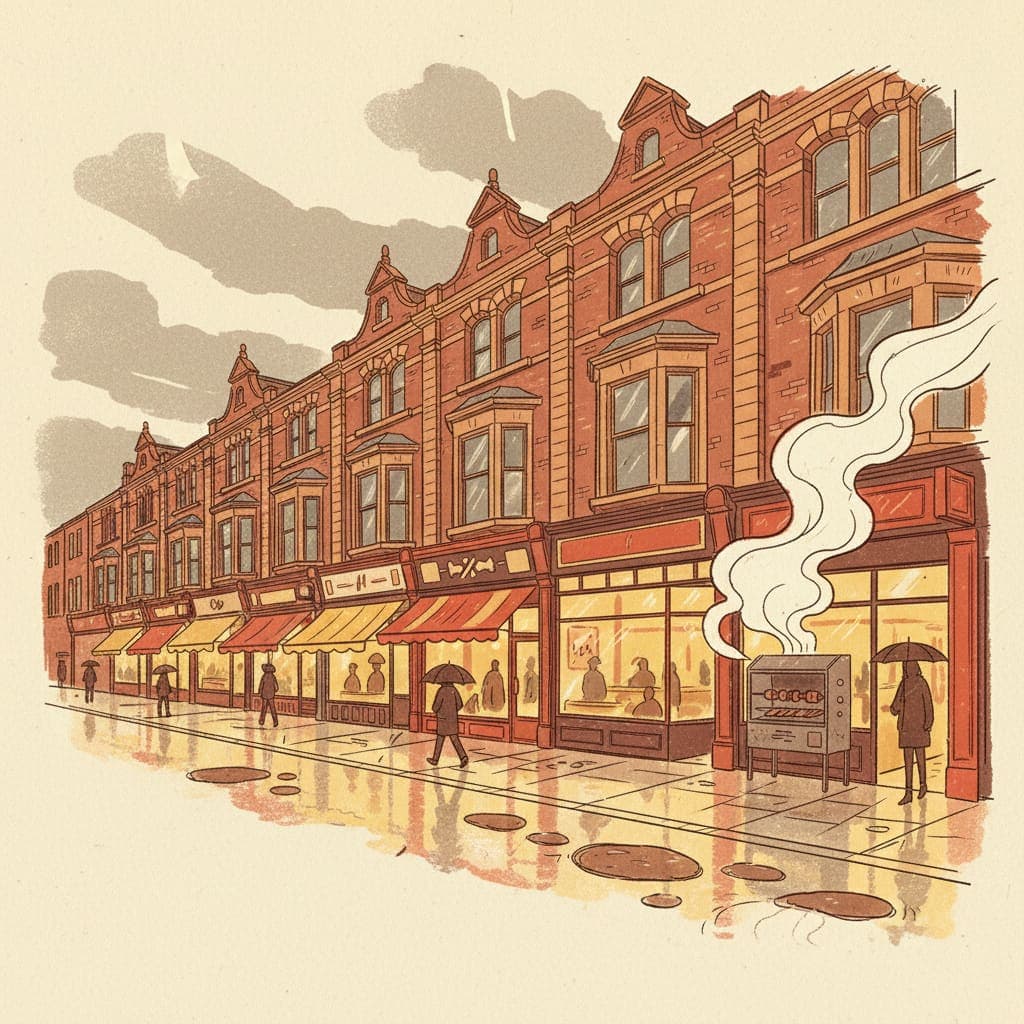
What we see in the Manchester market
Greater Manchester's restaurant economics differ from London in three ways that matter for marketing. Average order values tend to be lower (typically £18–£28 for takeaway versus £25–£40 in inner London for similar cuisines). A higher share of orders runs through Just Eat, Deliveroo and Uber Eats. And the customer base skews younger than the UK average, which changes which platforms actually move revenue.
That changes the playbook:
- Delivery platforms drive a larger share of revenue. Many Manchester takeaways do 60–80% of weekly orders through aggregators, versus 30–50% in some London postcodes. That makes platform listings — photography, menu structure, pricing tiers — disproportionately important. We've covered the maths on this in should I leave Just Eat and go direct and how to get more orders on Just Eat.
- Instagram and TikTok beat Facebook for most cuisines. Manchester's student population (roughly 100,000 across the four universities) and young professional base behave more like London Zone 2 than other Northern cities. If you're running ad budget on Facebook because someone told you to in 2019, it's probably underperforming. Our Instagram for restaurants guide walks through what actually works.
- Suburb takeaways often outperform city-centre on margin. A successful M19 or M14 takeaway running 200–400 orders a week, with rent at a fraction of Northern Quarter, will frequently net more than a dine-in NQ restaurant doing higher revenue. The marketing choice between "sell more covers" and "sell more orders" is fundamentally different in those two cases.
How Manchester customers find restaurants
Three patterns we see across kitchens we work with in M-postcodes:
Google Maps does most of the discovery work outside the centre. A customer in Levenshulme or Longsight searching "curry near me" or "biryani delivery" sees a Google Maps three-pack before anything else. Owning one of those three slots is the single highest-leverage thing a takeaway can do here. Our guides on why your restaurant might not be showing on Google Maps and how to rank a restaurant on Google Maps cover the mechanics.
Instagram is search, not just feed. Younger customers will check a restaurant's Instagram before ordering — looking at recent posts, recent stories, whether the place still feels alive. A profile that hasn't posted in eight weeks is a real silent killer in Manchester specifically.
Reviews compound faster here than in London. Lower competition density on review velocity means a takeaway that runs a steady review programme can move from 30 reviews to 150 in twelve months and visibly climb the local pack. Our guide to getting more Google reviews covers the safe, owner-run version of this — no incentives, no fake-review services.
Realistic ad budgets in Manchester
A few rules of thumb from Manchester campaigns we run:
- Most takeaway zones in M-postcodes work at £15–£20/day Google Ads spend. CPCs typically sit at £1.20–£2.50 for food terms — meaningfully cheaper than central London (£3+) but more expensive than smaller English cities.
- Northern Quarter dine-in restaurants typically need £25–£40/day because brand-led search ("best Indian Northern Quarter Manchester", "rooftop restaurant Ancoats") is more competitive.
- Match days at Old Trafford, the Etihad, and AO Arena events shift demand patterns inside a 2–3 mile radius. We pause or reweight campaigns on those days for clients in Trafford, Stretford and the city centre to avoid burning budget on traffic that won't convert.
For a fuller breakdown of when paid even makes sense, see is Google Ads worth it for takeaways.
Postcodes we work in
- M14 (Rusholme / Curry Mile) — heritage curry-house corridor, increasingly competitive, photo-led marketing matters here more than text-led SEO
- M8 (Cheetham Hill) — strong Pakistani / Persian / Yemeni cluster, lots of room on Google Maps for kitchens that maintain their profiles
- M19 (Levenshulme) — fast-growing independent scene, halal-focused, social-first customer base
- M13 (Longsight) — established South Asian takeaway market, delivery-platform optimisation often the highest-leverage move
- M1 / M3 / M4 (Northern Quarter / Ancoats) — dine-in, Instagram-led brands, press and influencer coverage matter as much as SEO
- M20 / M21 (Didsbury / Chorlton) — higher-end suburban dine-in, premium average ticket, review reputation is everything
- M3 / M5 / M16 (Salford / Trafford edge) — mixed delivery + dine-in, match-day-sensitive
What we typically work on for Manchester kitchens
For a Curry Mile or Levenshulme takeaway, the usual sequence is: rebuild and weekly-maintain the Google Business Profile to fight for the local pack, refresh photography and menu structure, and lift the Instagram presence so younger M-postcode customers can actually find you. For a Northern Quarter or Ancoats dine-in restaurant, the foundations are usually a fast, well-built restaurant website plus social-led brand work — SEO matters less than press, photography and review reputation. Most clients end up on a steady rhythm of Local SEO plus modest Google Ads on cuisine-specific search terms, with budget weighted around match-day calendars.
What we don't promise
We don't promise specific revenue lifts, ranking positions, or order-volume targets. Manchester's market is varied enough — Curry Mile, Levenshulme and Didsbury are essentially three different economies — that any agency claiming a guaranteed outcome should be questioned.
What we do commit to: a written 90-day plan, monthly reporting, transparent pricing, and a clear pause or pivot if it isn't working by month four. If we look at your kitchen and think you don't actually need an agency — that you'd benefit more from fixing one or two specific things yourself — we'll say so. That happens more often than you'd think.